Most health problems can wait for a GP appointment. Some cannot. Knowing the difference — and not hesitating when it matters — can change the outcome for the person you are worried about.
Get emergency help straight away if someone has
- Chest pain or pressure, especially if it spreads to the arm, jaw or back, or comes with sweating or breathlessness. While waiting for help, an adult who is not allergic to aspirin can chew one 300 mg aspirin tablet.
- Difficulty breathing — struggling to speak in full sentences, lips turning blue, or noisy, laboured breathing.
- Signs of a stroke — a face that droops on one side, weakness in an arm or leg, slurred or confused speech, sudden loss of vision or a sudden severe headache. Note the time the symptoms started, and get help even if the symptoms go away after a few minutes — that can be a warning that a bigger stroke is coming.
- Heavy bleeding that does not slow with firm pressure, a serious injury, a burn larger than the injured person’s own hand, a deep burn, a burn on the face, hands, feet or genitals, any chemical or electrical burn, or a suspected broken bone.
- A seizure (fit), fainting, or sudden confusion or drowsiness.
- A severe allergic reaction — swelling of the face, lips or throat, or difficulty breathing after a sting, food or medicine. If they carry an adrenaline pen (such as an EpiPen), use it straight away. Keep them lying down — or sitting up slowly if breathing is hard — and do not let them stand or walk, even if they feel better.
- A very unwell child — any fever of 38°C or higher in a baby under 3 months; a high fever with drowsiness or floppiness; a fit; fast or difficult breathing; a rash that does not fade when you press a glass against it; blue, grey or blotchy skin; vomiting everything; being unable to drink or breastfeed; or signs of dehydration such as very few wet nappies or sunken eyes.
- In pregnancy or after giving birth — vaginal bleeding, a fit, a severe headache that does not go away, blurred vision or flashing lights, severe tummy pain or pain below the ribs, sudden swelling of the face, hands or feet, fever, difficulty breathing, fluid leaking, or the baby moving less than usual. Our maternity team is here 24 hours a day.
- Poisoning, an overdose or a snakebite, self-harm or thoughts of ending one’s life, or severe tummy pain. For poisoning, bring the packet or bottle with you.
For a suspected heart attack or stroke, severe difficulty breathing, a severe allergic reaction, or someone who has collapsed and will not wake up, call an ambulance first — 999 or 112, or the Kenya Red Cross on 1199 — then call us on +254 721 600700. If the person stops breathing normally, start CPR (hard, fast pushes in the centre of the chest) until help arrives.
If you are unsure, come in. Our casualty would always rather see you early than late.
When a GP visit is the right choice
For coughs and colds, mild stomach upsets, minor sprains, repeat prescriptions, check-ups and stable long-term conditions, our general practice clinic is the better fit — walk in at any hour, or book ahead.
What happens when you arrive
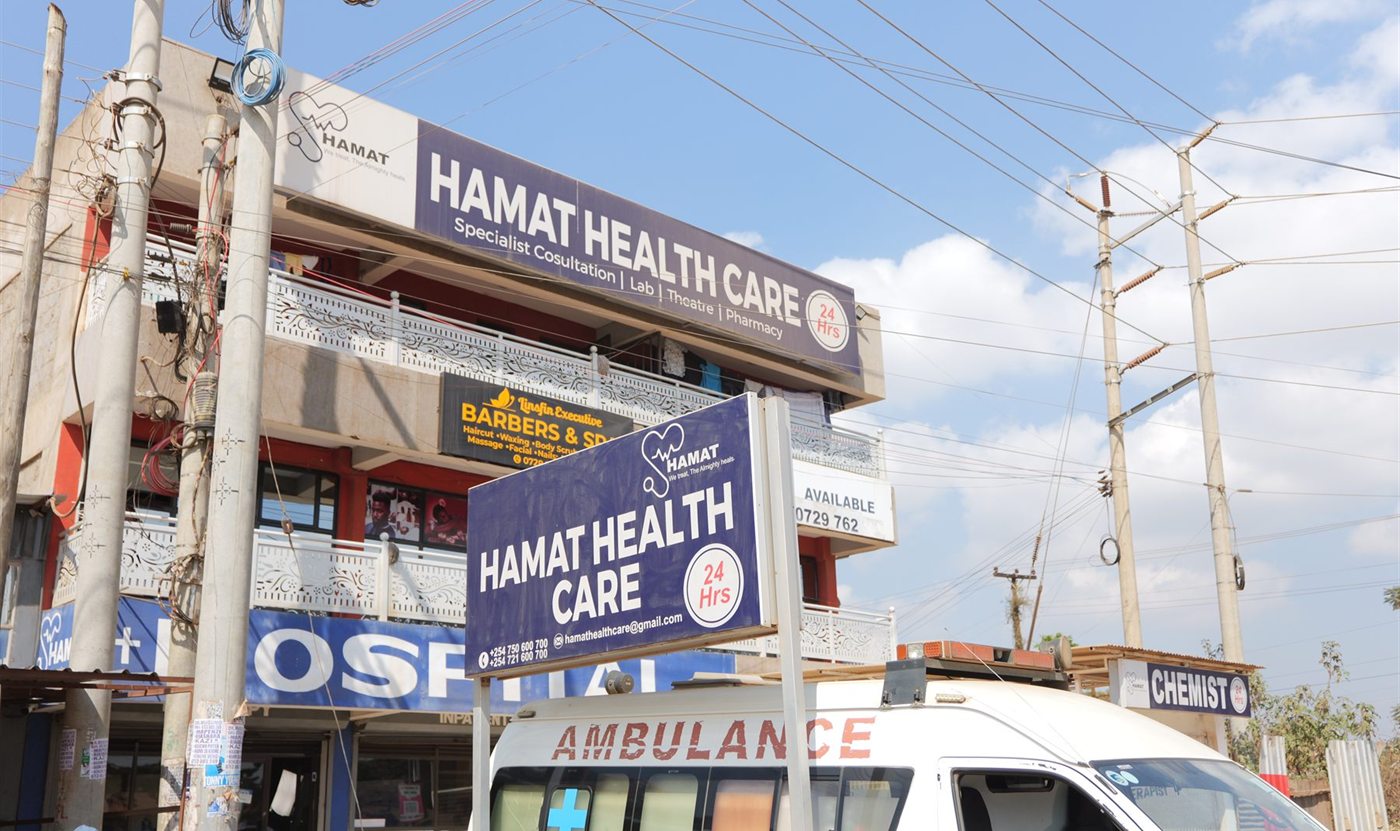
At Hamat Healthcare’s casualty in Membley, everyone is assessed on arrival — this is called triage — and the most urgent patients are seen first. Our laboratory works around the clock, so tests can guide treatment quickly, and patients who need to stay are admitted to our wards. If a higher level of hospital care (tertiary care) is needed, we stabilise first and arrange referral and transfer to a partner hospital in Nairobi.
Helping us help you
- Call +254 721 600700 on the way if you can, so the team is ready.
- Bring the patient’s ID, SHA or insurance card, and any medicines they take — or a photo of the packets.
- Do not give food or drink to someone who is drowsy or who may need an operation.
- Do not drive yourself if you have chest pain, are bleeding heavily or feel faint — call an ambulance, or ask someone to bring you if one cannot reach you quickly.
Read more about our 24-hour emergency and casualty service.
This article is general information, not a diagnosis. If you are worried about someone’s health, call +254 721 600700 or come in — casualty is open 24 hours a day, every day.